


Essay/Article
Written by Casper-Dakota Nurse-Baker
Tuesday, January 29th, 2026
Director Francis Ford Coppola's Latest Film Dares To Push The Medium Forward. Where Do We Go Now?
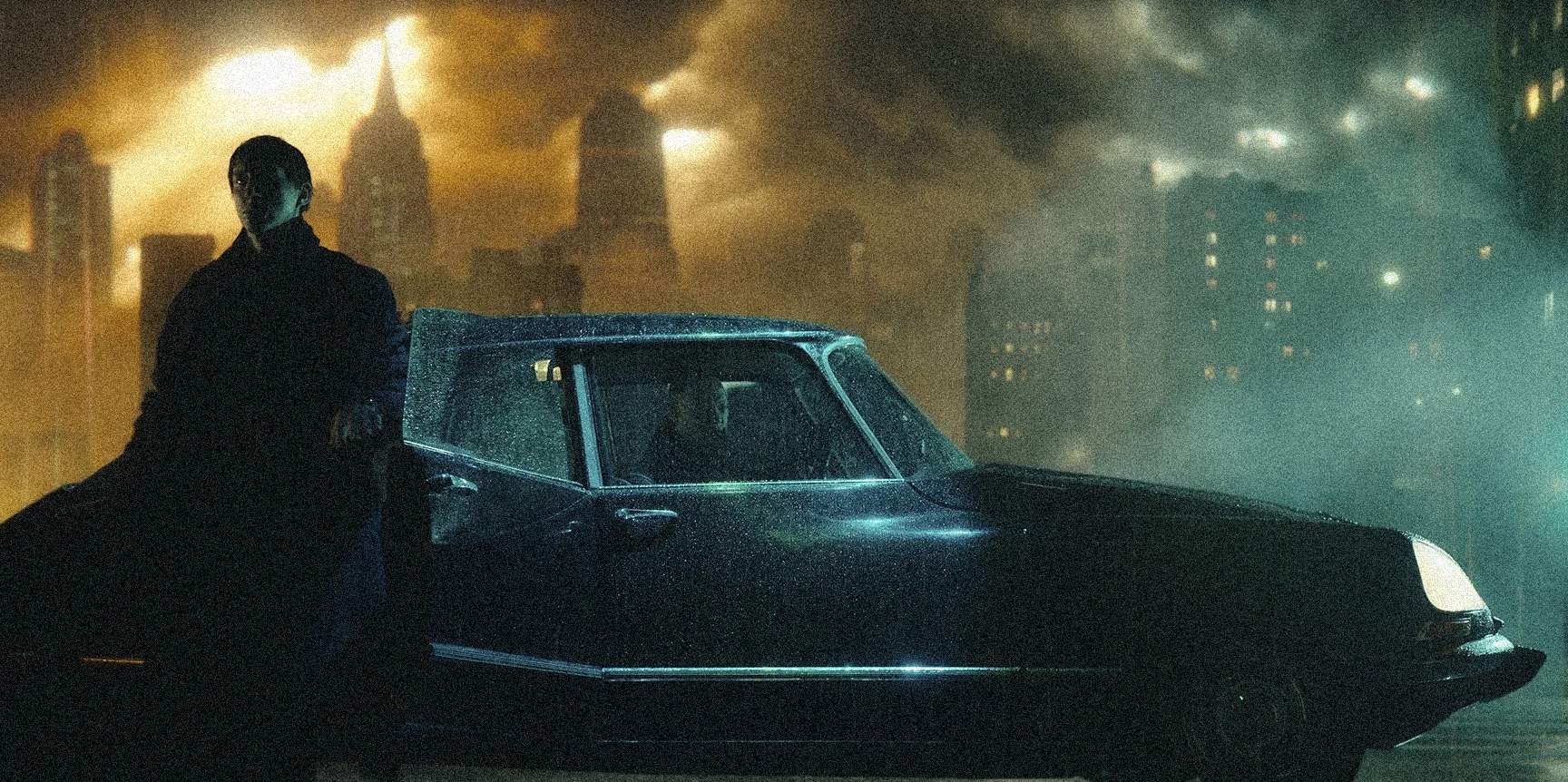
On 9th of August, 2024, Francis Ford Coppola posted a frame from his upcoming
film Megalopolis on Instagram with the caption "The future is a journey inward." In the post's comment
section, a user with the name 'charlesheinbaugh' asked Francis "why can't you make normal movie like batman or star
war". To which, Francis responded with "Because you already have good Batman and Star Wars movies. Aren't you
curious to see something you've never seen before?"
"Aren't you curious to see something you've never seen before?"
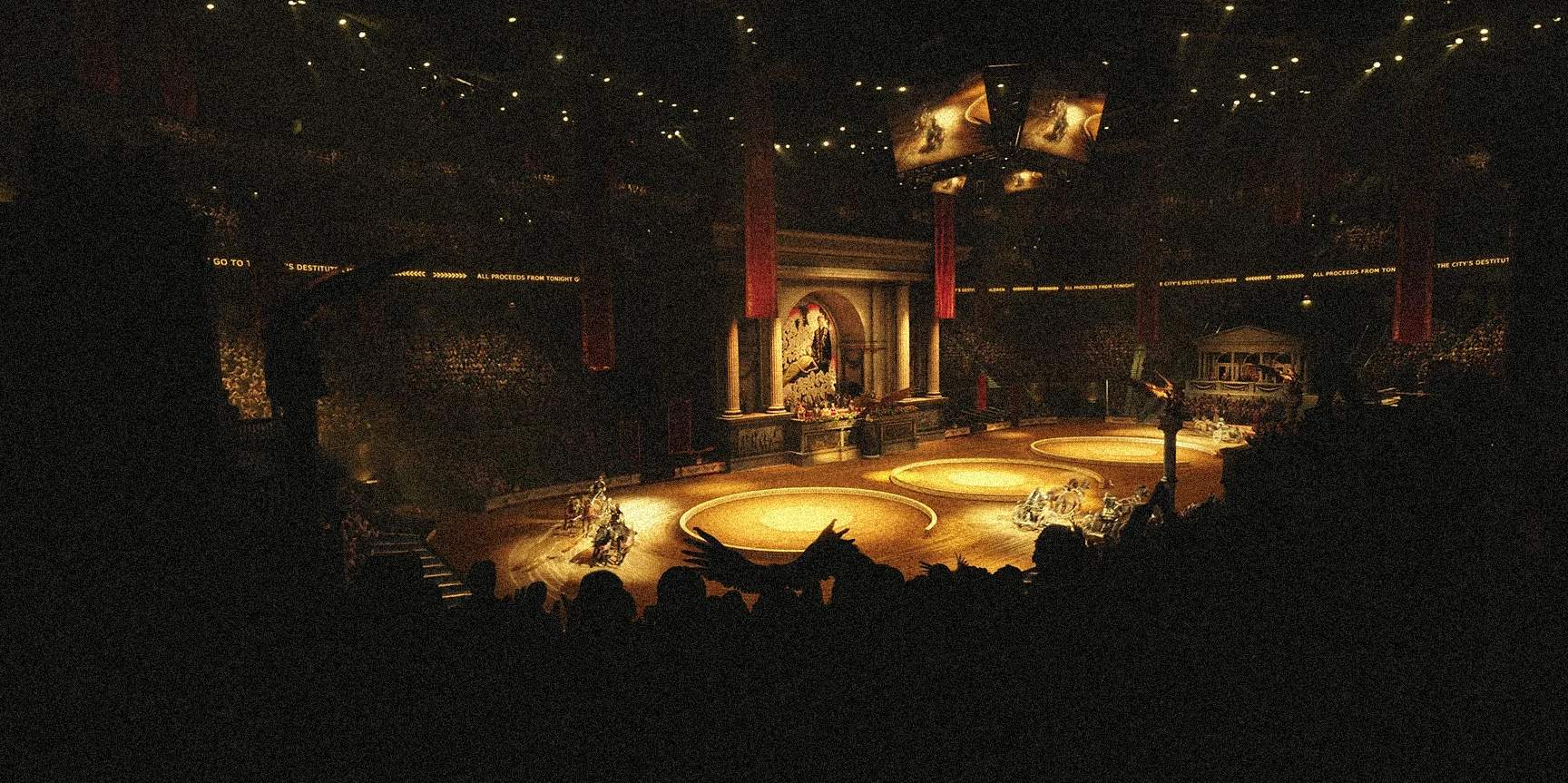
Megalopolis is the American science-fiction epic drama directed, produced, and written by famed film director
Francis Ford Coppola. Set in an alternate version of 21st century New York City, it stars Adam Driver, Giancarlo
Esposito, Nathalie Emmanuel, Aubrey Plaza, Shia LaBeouf, Jon Voight, Laurence Fishburne, Talia Shire, Jason
Schwartzman, Kathryn Hunter, Grace VanderWaal, Chloe Fineman, James Remar, D. B. Sweeney, and Dustin Hoffman in an
ensemble cast of diverse age and star power. With the idea for the film first germinating in 1977, the plot first
taking shape in 1983, and there being two unsuccessful attempts to produce it in 1989 and 2001, the journey to get
Megalopolis made has been long and winding. The finished film, released in 2024, is grand, nonformulaic,
philosophical, funny, unpredictable, creative, and unique. Backed by a popular cast, a star director, and wide
global distribution, it was uniquely positioned to help convince film audiences to, if successful, turn their
attention from franchise based storytelling back to original storytelling. To those it concerned, this success
would of course be measured by a mix of critical response, audience response, and its financial return -- though
skewed towards the latter, as is regrettably the standard within the film industry. This would act as 'proof' that
films like it can be made and still monetarily successful for the financiers behind it.
Before Megalopolis came out, I -- perhaps foolishly -- expected popular cinema to change drastically. The
manufactured story around the film, portrayed in its marketing, was one that centred around how the majority of
large modern films stick to tried and tested formulas which Megalopolis aimed to deviate from. By doing this,
it would potentially show both audiences and the film industry a new way forward. One which prides original visions
over the known and champions the creativity of its artists rather than a film's connection to existing stories.
After having seen it, I attended a special screening of the film at the BFI IMAX cinema in the heart of London,
witnessing a live QnA between Francis and author and archaeologist David Wengrow in which he made clear many of his
intentions when making the film, thoughts on the industry, and his desires on how the movie will be received:
"So, I very briefly would like to begin by saying, as you well know, movies are illusions. And they depend on the
audience [...] all the emotion that happens in a movie, the interest, it all comes out of the audience. So the
illusion depends on a narrow bunch of rules that they think a film must have. You have to realise that, today, they
have spent hundreds of millions of pounds to get you addicted to a certain type, the way you would be addicted to a
potato chip, that there's only one kind of movie and it's the movie that you've been programmed to see. But cinema
is much broader than that, and ultimately I would like to ask my colleague here [David Wengrow] a question -- Are
movies an art or a business?" Wengrow responded with "Can I ask you a question about archaeology?" Laughter ensued
and David continued, "Can I say they're a science?"
Francis continued, "People are scared of too much freedom. [...] they like to be bounded with a narrative [where]
you can see it context with something and enjoy it on that basis, and I have tried to make a film that has no
boundaries. [...] I don't believe that cinema is always the same."
"If you're in the business of cinema, it's good if you have something that's like Coca Cola that the audience
already knows what the rules are. People are scared when they give you too much freedom. They want to be held in
boundaries, and maybe this is what's going on in the world today, I don't know."
"[...] thought is more comfortable when it's limited, I think."
David made the point, "I take what you're saying, what you were saying slightly earlier, to mean that
there is a certain paradigm of cinema which renders certain aspects of what we're going to see [Megalopolis]
difficult to read for audiences." Francis quickly responded, "If it doesn't play by the accepted rules of the day,
then it's...depends on the willingness of the audience to go with it."
Here, we can connect what Francis speaks of to the staples of the modern film industry -- franchises and film
series hooking movie goers, audiences hesitant to see original films, and executives capitalising on people already
like to see rather than taking the risk of creating something new. That last point, concerning the aversion to
change and the new, appears to be something that Francis wishes would change in our society, beyond just the film
industry:
"My dream is that this film will be shown every new years. And when you go home after seeing it, you go home and not
say 'Oh I'm going to give up smoking.' or 'I'm going to give up eating too much', but instead ask one question --
Is the society we're in the only one available to us?"
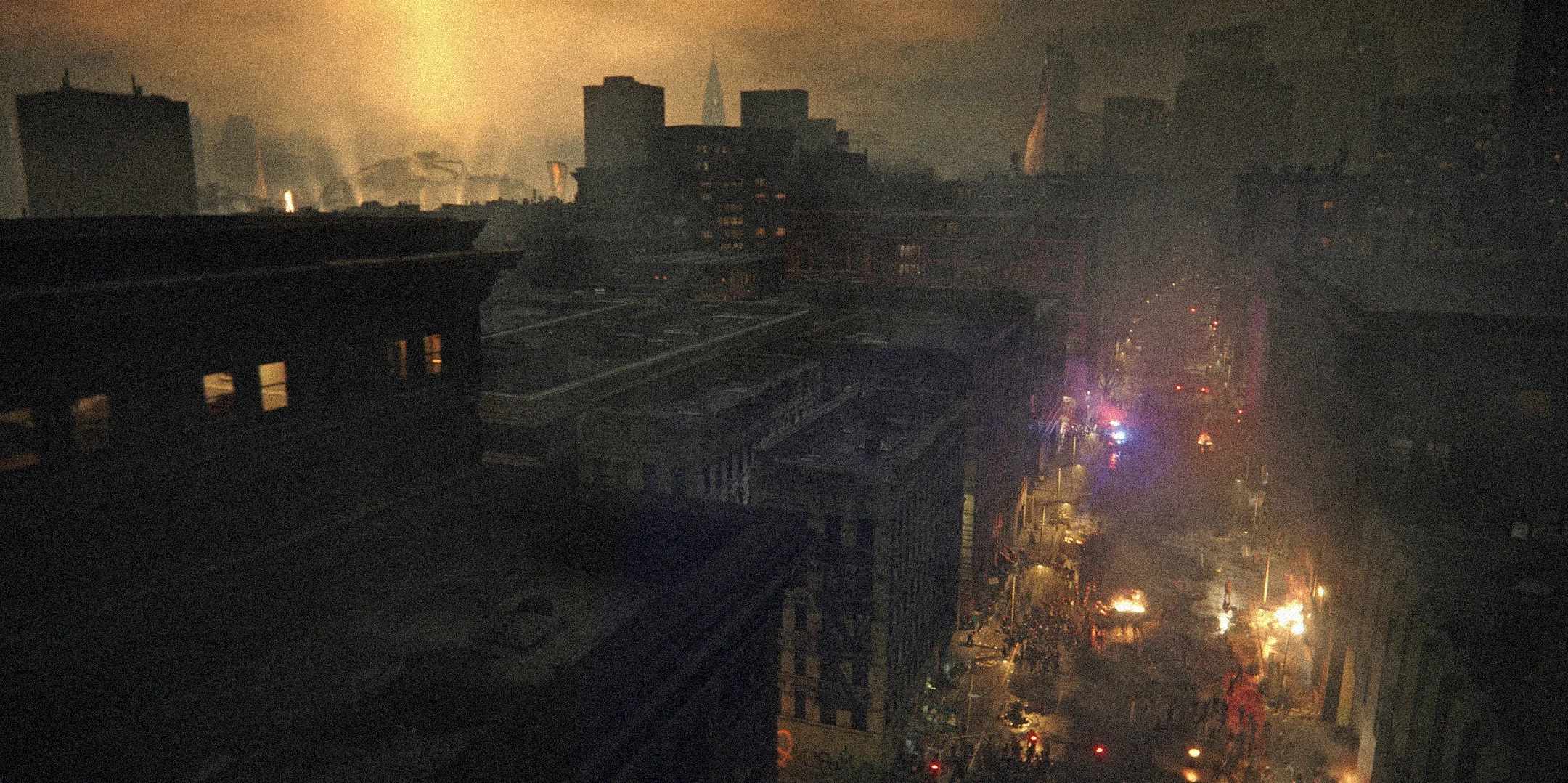
The film currently holds a 4.7/10
on IMDB, a 2.3/5 on Letterboxd, and a 46% on Rotten Tomatoes. Wider audience reviews which are slightly contrasted
by formal critiques that generally admire the creativity and boldness on display in the film while
acknowledging wider structural and tonal issues. Some of the held critical scores are a 3/4 from Brian Tallerico on
RogerEbert.com, admiration from Finn Dall, Kevin Bui, and Grace Boschetti on Rough Cut, and further general
positivity from Jonathan R. Lack on Fade to Lack. This, coupled with positive words from acclaimed filmmakers
Spike Lee, Rian Johnson, Guillermo del Toro, Spike Jonze, and Steven Soderbergh, points towards a divisive response
to the now 86 year old filmmaker's newest project.
Honestly, what type of change did I expect? Yes, interviews with Francis made it clear which aspects of the modern
film industry that he was seemingly frustrated with and wanted to challenge, but I am unsure which of them I
thought Megalopolis would succeed in changing. Considering how much Francis talked about it in interviews,
I think I expected the film to spark an uptick (hopefully) or a renaissance (ideally but admittedly unlikely) of
original films within the industry. I'm certain that a large part of this expectation stemmed from the fact that
Francis Ford Coppola has a history of making history. Starting in 1970 with his Academy Award winning screenplay
co-written with Edmund H. North for Patton, and continuing with his string of films directed and largely written
by Francis -- 1972's The Godfather, 1974's The Conversation and The Godfather Part II, and
1979's Apocalypse Now. Whether the recognition and celebration was immediate or took years of retrospection,
these were, and still are, acclaimed, culturally impactful, and original films which changed what films are made
and how. This term 'original' and the concept of originality are ones that, within film, prove to be everpresent
topics of discussion and ones which we must define if we are to fully understand Megalopolis' goal.
Defining originality in film requires us to be more specific than just the meaning of the word original -- that
being the earliest form of something, from which copies may be made. To be original is to be the first of something,
a feat particularly difficult within the broad spectrum of the arts considering how indellible previous works are
as inspiration. To create something, you will either consciously or unconsciously draw from a base knowledge of
what you know your medium to be and what within it you like. Taking this, and the fact that many films follow
derivative visual styles, story structures, and performance styles, we can define an 'original film' as a story or
concept which simply has not been exactly told in the medium before. Many films touted as 'original' are, in fact,
adaptations of novels, comic books, poems, etc. Francis' Godfather films are a prime example.
So, Megalopolis set out to create grand change within the film industry but seems to widely be assumed to have
failed. As stated earlier, the consensus on the quality of the film is muddy. Compared to other big-budget
auteur driven projects, the negativity hits extreme highs and the positivity does not come quite as close.
Financially, the film is reported to lose Coppola somewhere in the range of 100 million dollars. To cap it all off
the industry and enthusiast consensus is that of the film being an admirable yet failed experiment. The victory,
though small in comparison to changing the entire film landscape, may simply be the fact that the movie got made.
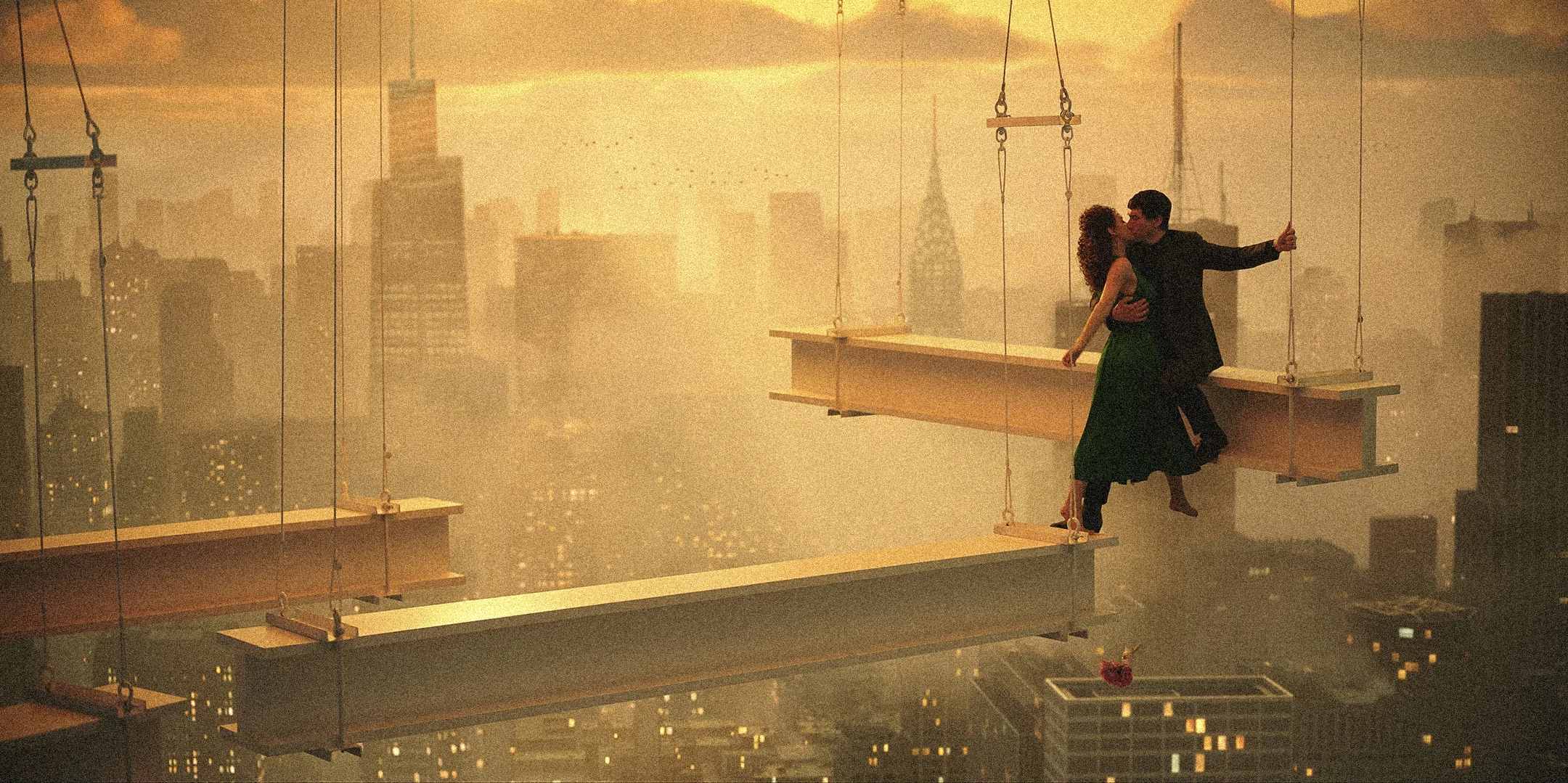
Francis' challenge to the film industry's status quo may not have caused drastic and immediate change, but its mere
existence and wide distribution may have succeeded in inspiring the next and current generation of filmmakers to
pursue originality when in their process of creation. Some online film enthusiasts already loudly proclaim their
love for the movie and its unabashed creativity on a blockbuster scale. Time will tell on how large the film's
impact on the creative community, and the film industry specifically, will be. I, for one, greatly admire the
film's bold, creative, and defiant spirit and believe it gracefully falls in line with the young, dreamer-like
vision of the Lucasfilm and American Zoetrope films of the 1970s. However, despite it not only being a fun watch
but also containing moments of genuine beauty and emotional resonance I do not think the film is great. For me, it
works as a creative experiment, social statement, and conversation starter but falls short of creating a cohesive
and fully formed film. With my criticisms still standing, I definitely like the film more than most and do not think
they take away from its often incredible visuals, ideas, and inventive filmmaking -- my heart still flutters when I
remember Cesar Catilina responding to a question read out-loud by a cinema employee during the film's mid-point
press conference scene. However, more than all of that, the film's imagination inspires me.
Admittedly, the filmmaker most able to challenge the current status quo is not Francis Ford Coppola, but Sir
Christopher Nolan. The 55 year old filmmaker stands ahead of his peers when it comes to creating successful
original films, having won the Academy Awards for Best Picture and Best Director for his 2023 film Oppenheimer --
an adaptation of the biographical book American Prometheus: The Triumph and Tragedy of J. Robert Oppenheimer. The
film grossed a staggering 975.8 million dollars against a roughly 100 million dollar production budget, and has
seemingly left a lasting impact on general and film enthusiast audiences. One of these lasting impacts being
creating a somewhat mainstream understanding of large format capture and projection systems. An incredible feat
for the three hour epic biographical drama whose premise would lead many to assume that the film could not succeed
in the modern film landscape. Making further use of his influence, Nolan champions the use of traditional filmmaking
techniques and formats within the industry while pushing to modernise them so that they can easily integrate into
current systems -- effectively keeping the old alive. Nowhere is this more evident than in his upcoming film, one
of a vast blank-cheque-esque canvas awarded to him by the success of Oppenheimer, The Odyssey. The adaptation of
Homer's circa 8th century BCE piece of epic literature will reportedly feature grand animatronic work akin to the
midcentury creatures of Ray Harryhausen, large on-location sets, and newly designed evolutions of the 70mm IMAX
cameras Nolan used to film Oppenheimer. It is currently one of the most anticipated movies of the year with both
general and film enthusiast audiences. It's with this film that we can see that Nolan is the filmmaker most able to
bring original films, as we have defined them, back to the forefront of the film industry.
If not Nolan, then maybe Steven Spielberg with his upcoming film Disclosure Day, or Alejandro González Iñárritu
with Digger, Robert Eggers with Werewulf, the next original Ryan Coogler film, the next original Denis Villenueve
film the next Jordan Peele film. There are many filmmakers already creating original stories for the public and
countless more, myself included, who are working towards doing the same. Perhaps, as long as large film studios
are willing to fund projects from popular auteurs and let the quality associated with their names draw audiences
in rather than the recognisability of a film series, original films will still be able to thrive in popularity and
financial success. It, however, must be a symbiotic relationship. The filmmakers must create original films and
the audience must willingly seek them out. Create original, see original.
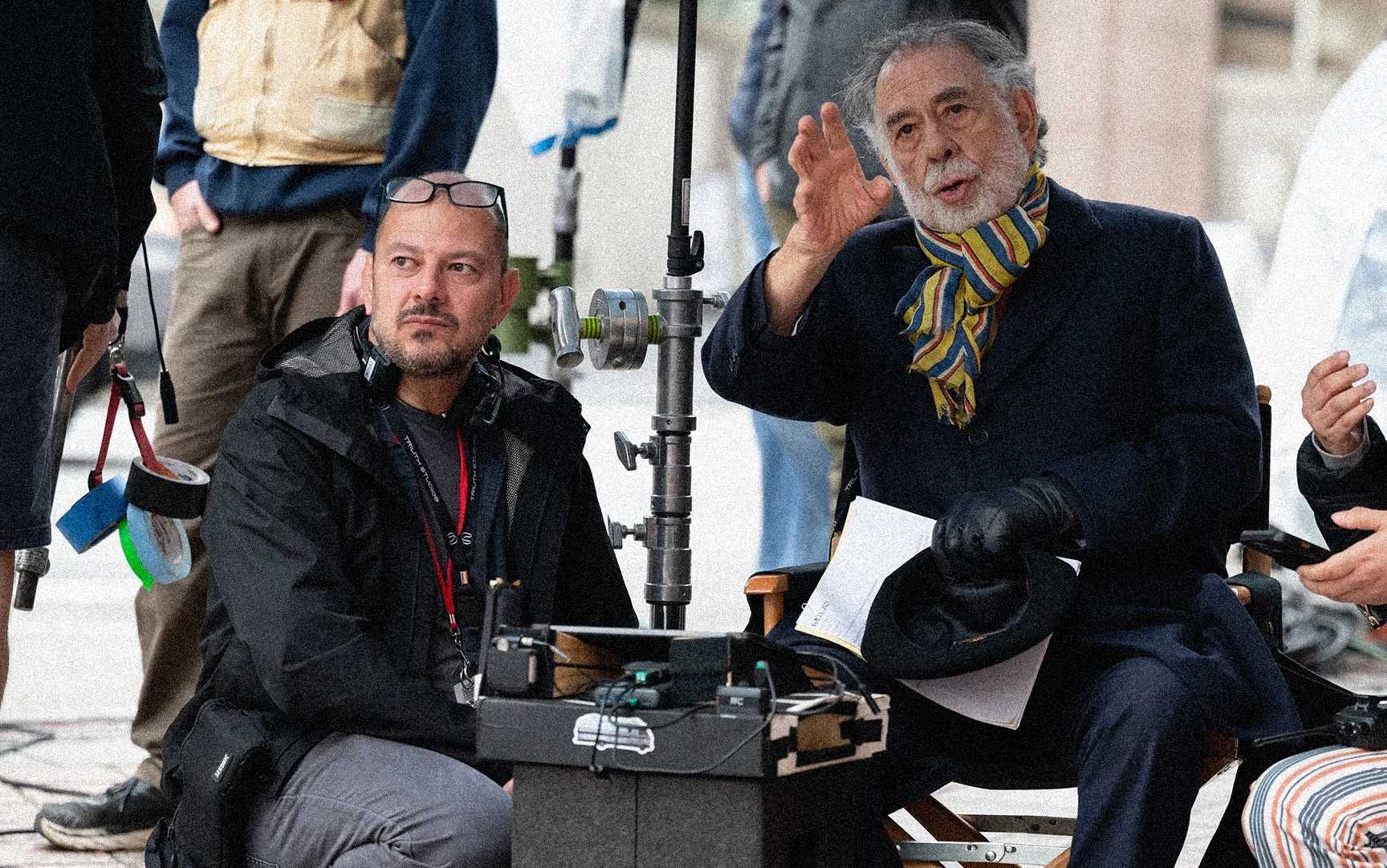
Coppola has stated that he has plans to make two more films -- one a "strange 30's style musical" based on an identically named Edith Wharton novel titled 'Glimpses of the Moon' and the other, 'Distant Vision', is his self-described final film and will hypothetically be "immense" and "more ambitious than Megalopolis." For Francis, the creation of these films will be a challenge of financing and scheduling unlike anything most filmmakers experience. Megalopolis' dismal financial returns will likely make outside financiers hesitant to fund the director's next projects. Possibly forcing him to use even more of his personal fortune to cover the costs of production and maybe even distribution. With scheduling, Coppola will face what his peer and friend Martin Scorsese publicly discussed in his September 2023 GQ profile -- that when taking on the multi-year development process of a feature film as someone close to the natural end of your life, it's a race against time.
The full QnA with Francis Ford Coppola at the BFI IMAX is available to watch here: https://www.youtube.com/watch?v=h0tw7Sws3lw
This article is also available to read on Substack at the link below:
https://open.substack.com/pub/cdnb/p/megalopolis-and-the-future-of-film?r=28cvkf&utm_campaign=post&utm_medium=web&showWelcomeOnShare=true
This article was written without any generative artificial intelligence.
Bibliography:
Baron, Z. (2023). Martin Scorsese: ‘I have to find out who the hell I am’. [online] British GQ. Available at: https://www.gq-magazine.co.uk/article/martin-scorsese-interview-2023.
Coppola, F.F. (2024). Megalopolis. [online] IMDb. Available at: https://www.imdb.com/title/tt10128846/.
Danoff, O. (2024). Guillermo Del Toro, Spike Lee & More React To Francis Ford Coppola’s Megalopolis. [online] ScreenRant. Available at: https://screenrant.com/megalopolis-guillermo-del-toro-spike-lee-steven-soderbergh-director-quotes/.
Fordham, J. (2024). Material Ecology for Megalopolis. [online] The American Society of Cinematographers. Available at: https://theasc.com/articles/material-ecology-megalopolis.
Lack, J.R. (2024). Review: Francis Ford Coppola’s ‘Megalopolis’ is a joyously messy paean to creativity. [online] Jonathanlack.com. Available at: https://www.jonathanlack.com/p/review-francis-ford-coppolas-megalopolis.
Letterboxd.com. (2024). Megalopolis (2024). [online] Available at: https://letterboxd.com/film/megalopolis-2024/.
Ruimy, J. (2024). World of Reel. [online] World of Reel. Available at: https://www.worldofreel.com/blog/2024/12/2/francis-ford-coppola-to-shoot-his-next-film-in-early-2025.
Tallerico, B. (2024). Megalopolis movie review & film summary (2024) | Roger Ebert. [online] Roger Ebert. Available at: https://www.rogerebert.com/reviews/megalopolis.
Wikipedia Contributors (2019). Francis Ford Coppola filmography. [online] Wikipedia. Available at: https://en.wikipedia.org/wiki/Francis_Ford_Coppola_filmography.
Wikipedia Contributors (2025). Megalopolis (film). [online] Wikipedia. Available at: https://en.wikipedia.org/wiki/Megalopolis_(film).
Wikipedia. (2023). American Prometheus. [online] Available at: https://en.wikipedia.org/wiki/American_Prometheus.
